Upgrades in technology, strategic
partnerships and improving efficiency can help improve or further accelerate
food and beverage profitability.
NATIONAL REPORT — Finding
methods to improve or further accelerate food and beverage profitability is on
the menu for hotel operators as they look to slice and dice escalating costs,
waste and ongoing labor shortages.
According to Justin Fowler,
chief operating officer of Denver-based Sage Restaurant Concepts (a division of
Sage Hospitality Group), labor is the most significant challenge in the F&B
space.
“Minimum wage increases for
both tipped and non-tipped employees have substantially increased our labor
costs. This, coupled with the post-pandemic labor shortage, has created a
perfect storm. The scarcity of skilled labor impacts service quality and drives
up overtime costs, significantly eroding our profitability,” he said. “This
trend, combined with rising food and beverage costs, puts immense pressure on
the bottom line.”
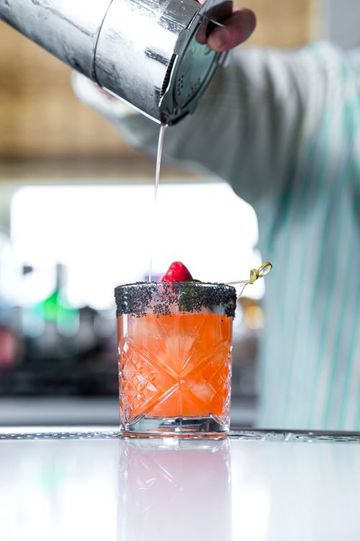
Davidson embraces developing mocktails/specialty cocktails to drive additional revenue.
To mitigate these challenges,
Sage has made strategic investments in technology, said Fowler, citing
platforms such as Craftable and Hotel Effectiveness that have “proven
invaluable” in optimizing operations for Sage, which has 67 restaurants across
12 states. This includes the upscale casual standalone F&B outlet
Mercantile Dining and Provision in Denver.
Both the rising cost of goods
and the labor market tick the challenge boxes for Jordan Davis, senior director
of sourcing and culinary strategy for Atlanta-based Davidson Restaurant Group,
a division of Davidson Hospitality Group, which has F&B operations in
nearly all of its 85 upper-upscale properties.
Davis said partnerships have
become one of the core strategies for reducing challenges and improving the
profitability of F&B operations.
“Utilizing partnerships like
Foodbuy Hospitality and building direct partnerships with suppliers where gaps
exist is a highly effective strategy for managing and controlling the cost of
goods sold in an environment where prices are rising,” she said. Another tact
is reviewing competitive set restaurant, bar and banquet menu pricing on a
regular basis “and adjusting our pricing to match market expectations,” she
added.
While Charleston, South
Carolina-based Indigo Road Hospitality Group has a smaller portfolio of six
independent boutique properties (two of which it owns), each hotel includes an
F&B concept. The group has 38 separate restaurants/event venues, with F&B
representing 60% of its total revenue, according to Jennifer Krapp, director of
restaurant operations.
“Many of the challenges we’re
facing in operating profitably are industrywide. Like others, we are
experiencing rising expenses across the board, including food costs, labor
costs and other operational expenses,” she said.
Krapp credits IRHG’s team
members with continuously finding ways to improve efficiency while the company
provides training and development programs to enhance their skills.
“While we appreciate the role
technology can play in cost control — and we’re certainly not afraid to use it…
we focus on empowering our team rather than immediately turning to automation
or other technological solutions,” she said. “We train and educate our team
members to improve communication, streamline communication, reduce workflows
and reduce waste.
“To support these efforts,
we’ve also created a dedicated purchasing role to strengthen vendor
relationships and ensure we maximize the value of our partnerships.”
Krapp said Indigo Road is
leveraging technology “where it makes sense,” and cited MarginEdge, a
restaurant management software program, as an “invaluable tool” for monitoring
and controlling F&B costs.
Sage’s Fowler suggested
there’s always a learning curve with new tech, “but we have seen some great
returns. We’ve streamlined our operations by eliminating unnecessary steps and
implementing more efficient processes. By leveraging technology and focusing on
operations, we’ve been able to improve our profitability and maintain our
commitment to delivering exceptional dining experiences.”
With F&B representing 28%
of total revenue for Davidson, Davis agreed that leaning into advanced technology is
important on different levels for the company. “Leveraging new technology and
focusing on sustainable operations are both key initiatives for DHG to not only
boost profitability but also to stay relevant in today’s competitive and
environmentally conscious market,” she said.
Getting creative
Boosting the bottom line for
F&B is being approached in various ways, including getting creative with
operations.
On the technology side, one
innovative approach Sage is implementing is leveraging benchmarking technology
within its point-of-sale system, appropriately named Toast. Fowler noted that
F&B represents approximately 18% of total revenue for Sage.
At Indigo Road’s Skyline Lodge
in Highlands, North Carolina, it introduced a guest chef series that utilizes a
semi-private outdoor space typically unused on weeknights. The series, Krapp
said, offers guests “a unique dining experience that celebrates distinctive
flavors, fosters connections and boosts revenue on slower evenings. By
leveraging semi-private spaces, we attract guests who want an elevated
experience without the cost of event fees or fully private venues, creating a
perfect balance between exclusivity and accessibility. Our team is undeniably
creative. Creativity enhances the guest experience and often
generates additional revenue outside of our normal operations.”
Fowler indicated that seizing
on those creative F&B opportunities is imperative, noting that the Sage
team is exploring creative partnerships with local businesses and community
organizations to host special events.
“These collaborations attract
new customers and foster a sense of community and loyalty. These can range from
a one-off whiskey partnership at our restaurant in Virginia or movie nights at
our restaurant in downtown LA,” he said.
Trends in F&B
When it comes to F&B,
trends come fast and furious. Some prove transferable to hotel F&B
operations, others not so much.
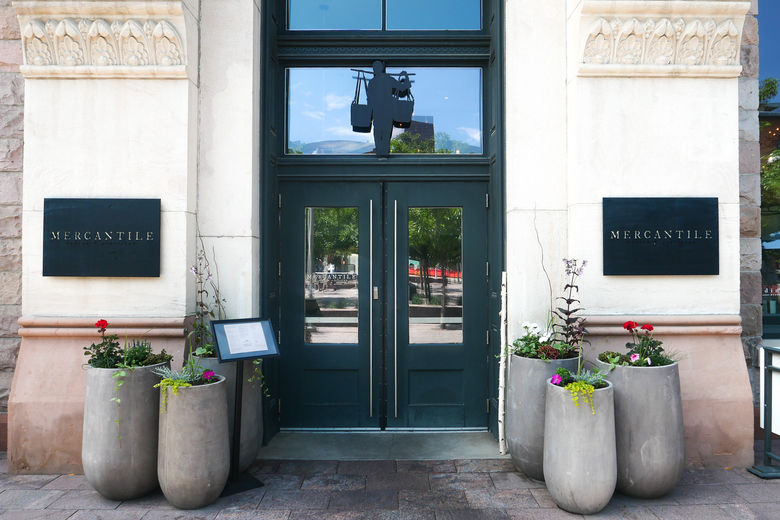
Standalone F&B outlets like Mercantile Dining Provision in Denver help drive revenue for Sage Restaurant Concepts.
A quick glance at the 2025
Hospitality Trends Report by AF & Co. and Carbonate may have hoteliers
considering placing self-serve ramen noodle stations in their lobbies along
with Korean and Japanese convenience store items; offering a plethora of
pistachio-infused products, from cocktails to butter or capturing market share
with non- or low-alcohol alternatives. According to executives, keeping an eye
on what gets embraced is another key goal toward profitability.
“One way we track F&B
trends is by closely observing how our guests interact with our concepts,” Krapp said. “Any changes we make must ultimately benefit the guest, but that doesn’t
mean we can’t benefit as well.”
Indigo Road implemented
changes at the rooftop bar of The Flat Iron Hotel in Asheville, North Carolina,
that combined revenue maximization with cost reduction.

When we first opened, the rooftop featured a robust menu; however, we noticed that most guests came primarily for the views and cocktails. With this insight, we scaled back the menu to focus on small bites and fewer options, which required fewer employees to execute.
Jennifer Krapp
“When we first opened, the
rooftop featured a robust menu; however, we noticed that most guests came
primarily for the views and cocktails. With this insight, we scaled back the
menu to focus on small bites and fewer options, which required fewer employees
to execute,” she said.
Fowler said Sage is focused on
the significant trend of healthier dining options. “As consumers become
increasingly health-conscious, we’re incorporating more plant-based,
gluten-free, low-calorie dishes into our menus,” he said.
While smartphone cameras are
usually everywhere F&B is, reaction was mixed regarding the role social
media plays in helping to increase profitability.
“Establishing a destination
F&B experience that can be splashed across social media is a powerful
strategy for driving traffic and increasing profitability,” Davis said. “By
embracing trends like Instagrammable dining, health-conscious menus,
experiential events, craft beverages and pop-up concepts, DHG can stay
competitive and create buzzworthy experiences that inspire guests to visit,
share and return. These strategies ultimately help build a strong brand
presence, foster customer loyalty and drive both local and international
traffic to hotel F&B operations.”
On the flip side, Fowler said
Sage acknowledges the power of social media when it comes to dining, “but we’re
not interested in chasing viral trends. We’re committed to creating genuine and
lasting dining experiences. Our focus is on delivering exceptional food and
service that resonates with our guests on a deeper level.”
Revenue opportunities
Both Davis and Fowler said
they would be considering revenue “add-ons” for their respective F&B
operations.
“Banquets and catering revenue
are the first things that come to mind,” Fowler said. “It’s far more
cost-effective to offer this than à la carte restaurant revenue, with profit
margins often reaching 50% to 60%.”
Davis said that for Davidson,
partner collaborations for pop-ups, marketing activations, and developing
mocktails/specialty cocktails were options to drive additional revenue.
Another important
consideration is having a dedicated restaurant entrance, according to Krapp. “It
shouldn’t be hidden inside the hotel, making it hard for guests and the
community to find. A hotel restaurant needs its entrance and identity and
should be marketed and positioned that way. It should be a place where
community members want to dine — not just hotel guests.”
Treating the restaurant as a
standalone property is the key to increasing profitability, Fowler noted. “By
utilizing a standalone P&L, we can clearly understand each F&B outlet’s
revenue and cost structure. This granular level of analysis allows us to
identify areas for improvement and make data-driven decisions. It’s essential
to view F&B operations as profit centers, not mere amenities.”